
Landed homes
Home EV Charger Installation for Singapore Landed Homes
A fixed smart wallbox in your car porch, sized to your supply and your car, installed by a Licensed Electrical Worker and registered with LTA for you.
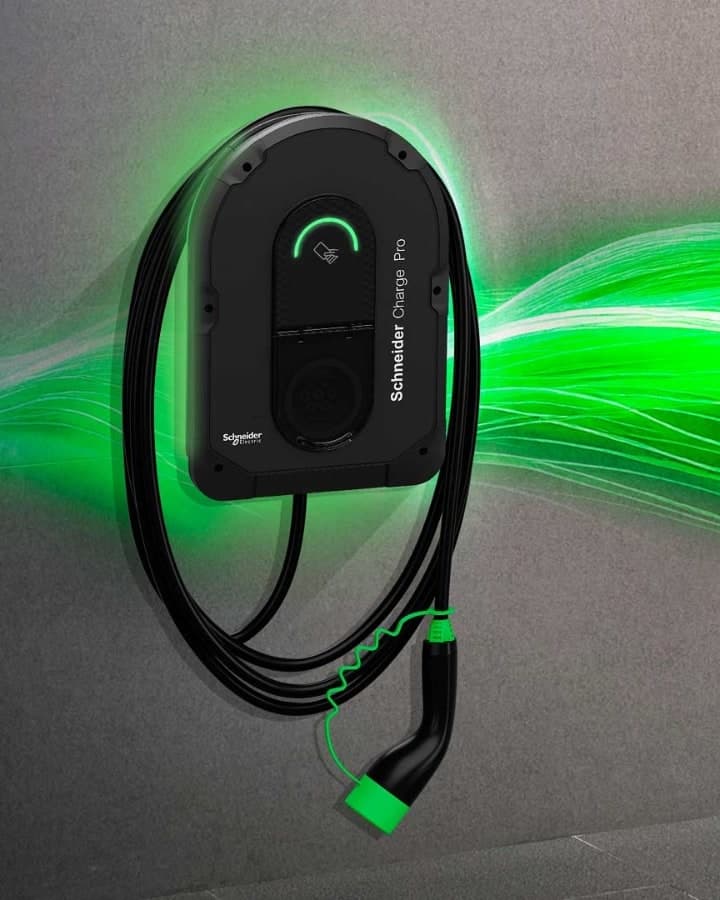
Product image
Why a fixed charger
Charge at home every night, safely
If you live in a landed home, your car porch is the most convenient charger you will ever have. Plug in when you get home, and the car is ready in the morning. A fixed wallbox on its own protected circuit charges faster than a portable charger, and it is built to run for hours every night.
The rules matter too. Under the Electric Vehicles Charging Act, a fixed charger must be an LTA type-approved model, installed by a Licensed Electrical Worker, certified by a charger equipment specialist and registered with LTA before you use it. We take care of every step, so you only deal with one team.
Live in a condo instead? See condo EV charging for MCSTs. Personal chargers are not offered for HDB flats; HDB car parks are served by public chargers under LTA's programme.
What's included
Everything from survey to LTA registration
Free site survey
We check where you park, the cable route from your distribution board and the mounting position.Load assessment
We read your main breaker and household peak load, and confirm whether you have single- or three-phase supply.LEW installation
A dedicated circuit with the right protection, neat trunking and up to 20m of cable included in a standard installation.Certification and registration
A charger equipment specialist certifies the charger, and we register it with LTA on your behalf.Smart setup
We connect the charger to its app and show you how to schedule and track charging.Inspection reminders
Landed-home chargers must be inspected every 24 months. The first inspection, on installation, is included. Each later inspection starts from S$150 per EV charger. We remind you and can book it.
How it works
Home EV charger installation, step by step
Free
Site survey
A short visit to look at your porch, board and cable route, and to ask which car you drive.Load assessment and quote
We size the charger to your supply and car, then send a fixed quote with any extra works listed separately.Installation
A Licensed Electrical Worker installs the wallbox on its own circuit and tests it. Most home installs take half a day.Certification
A charger equipment specialist certifies the installation, which LTA needs for registration.LTA registration
We register the charger with LTA before you use it and fix the registration mark within 60 days.First charge
We walk you through the app and the charger. After that, every 24 months, it is due for inspection.
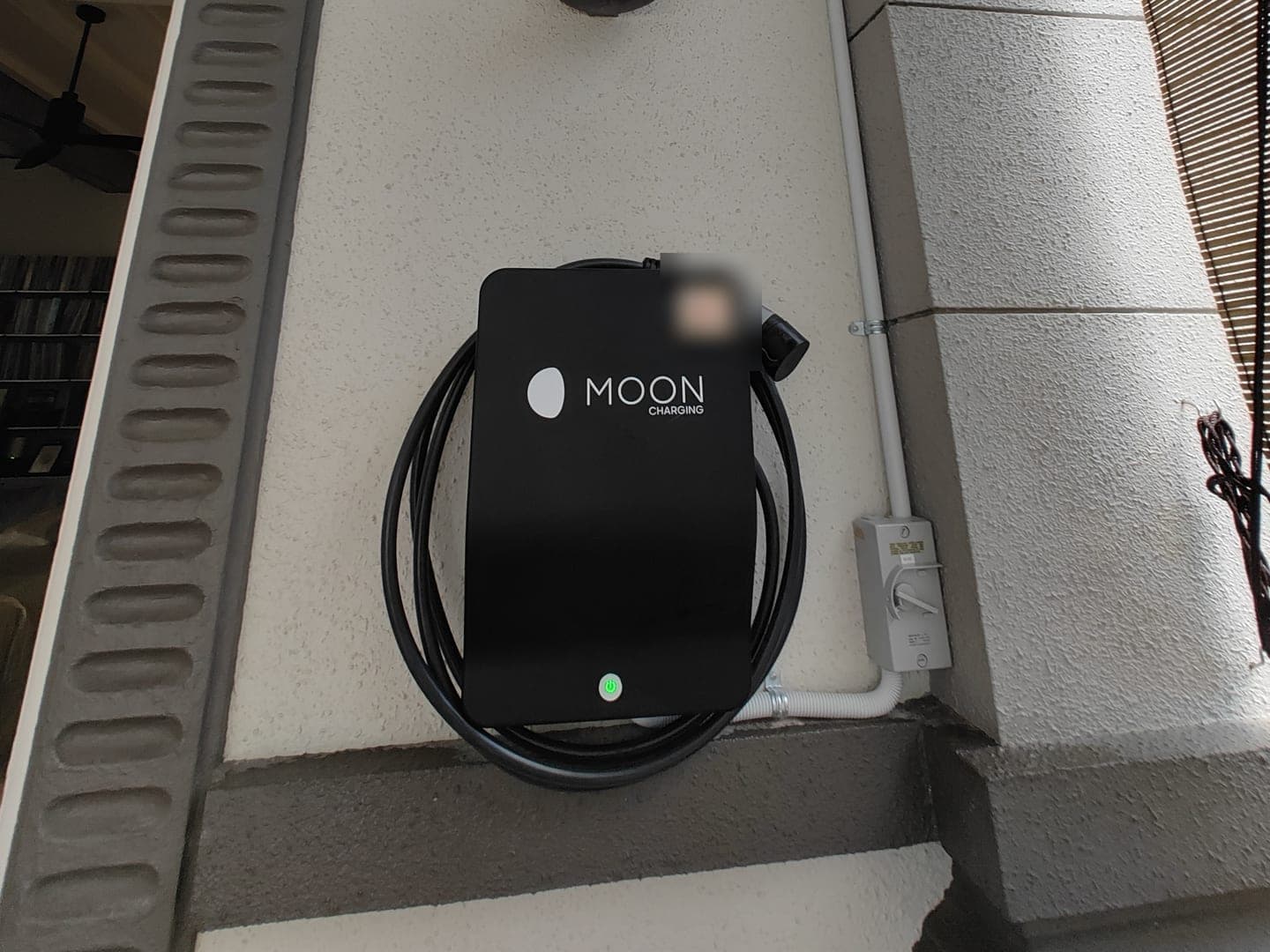
What it looks like
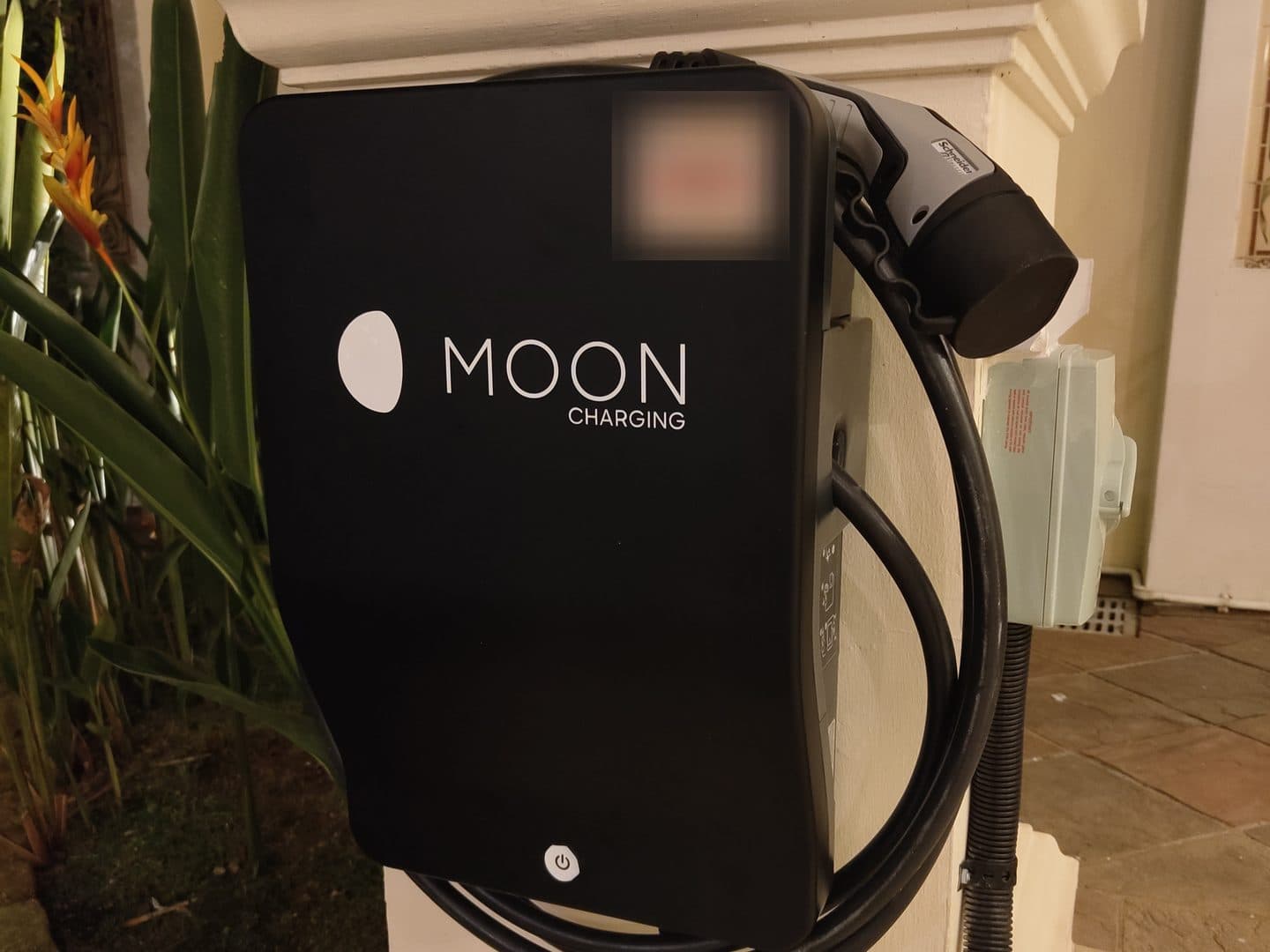
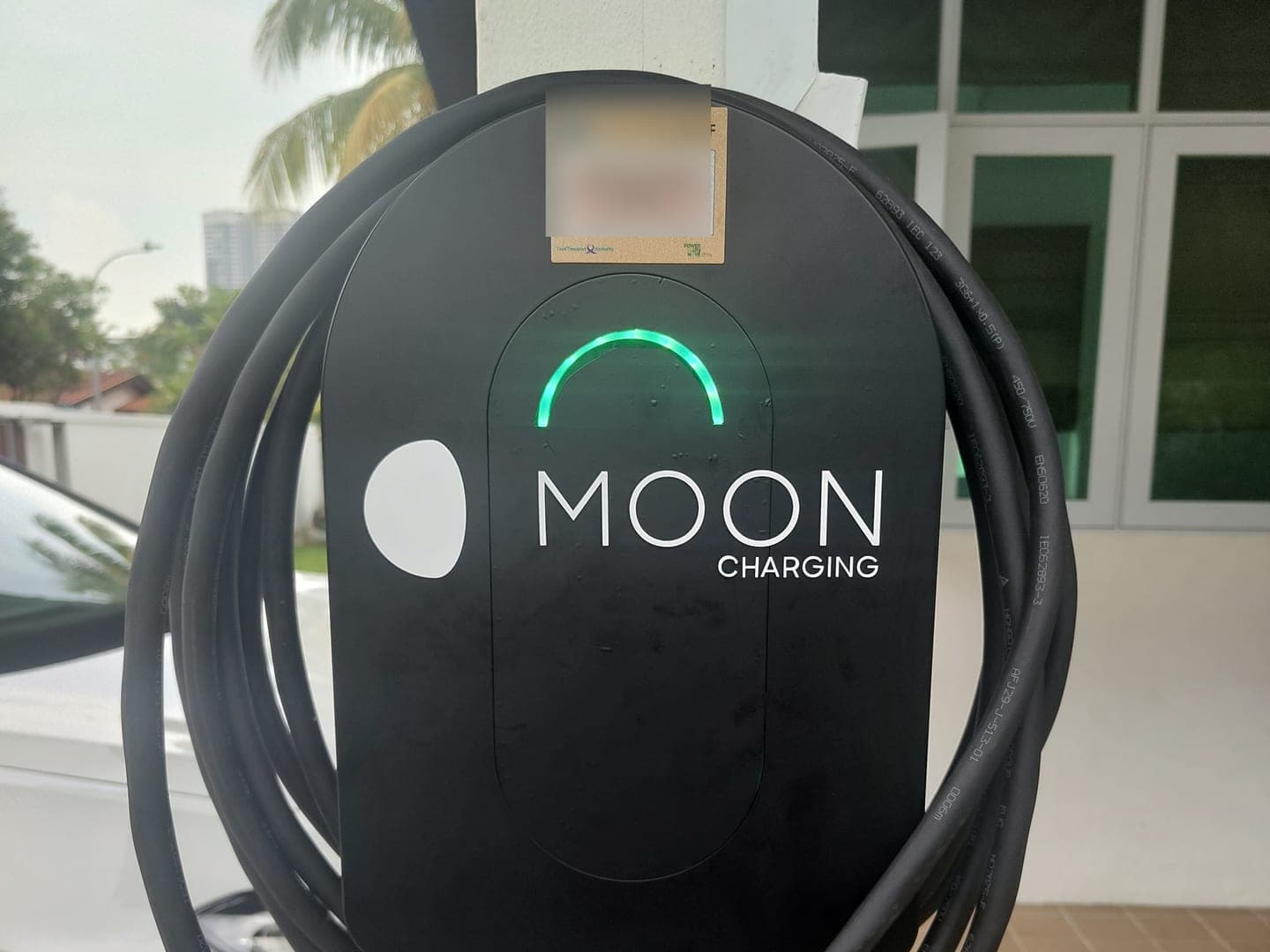
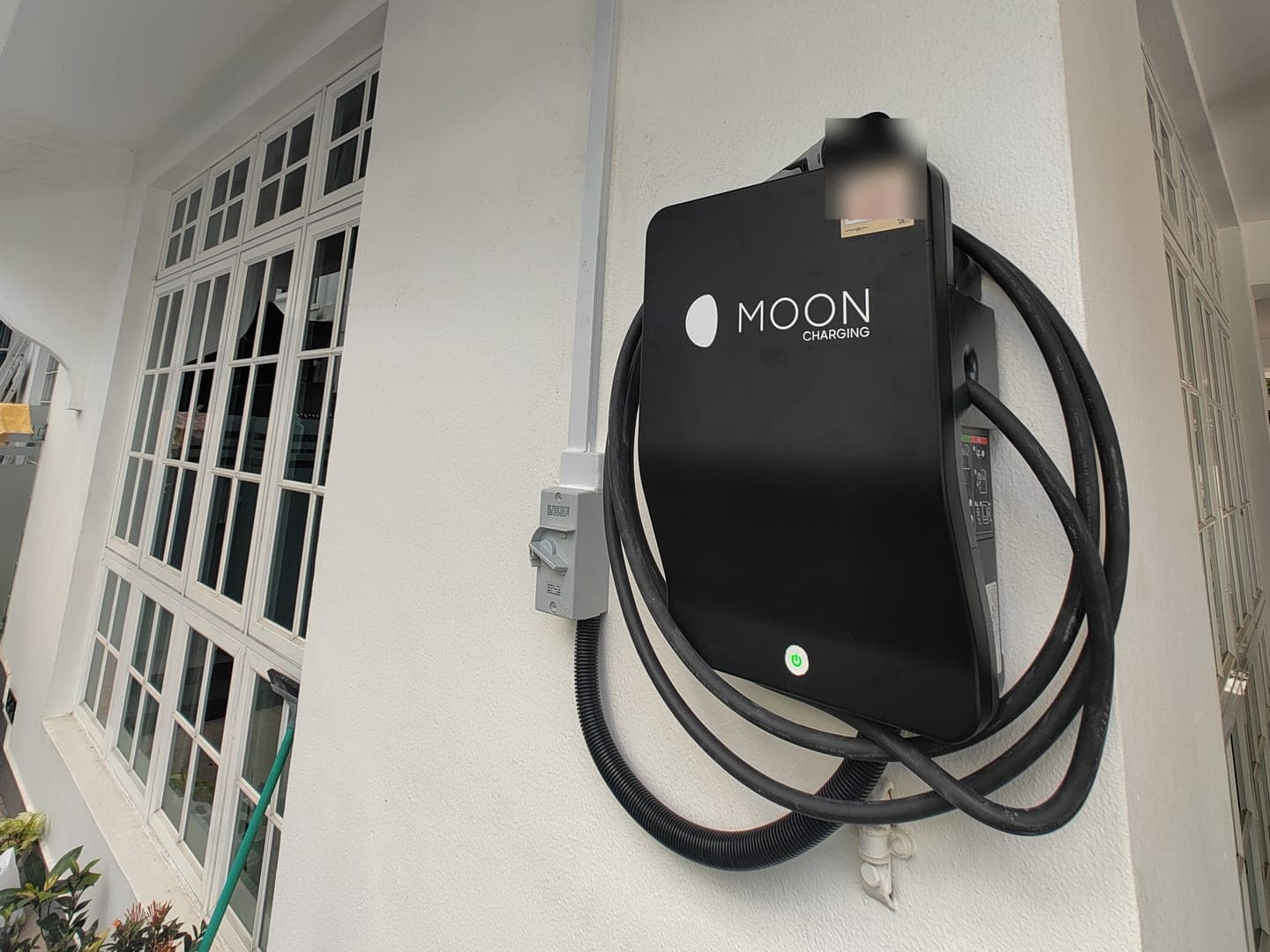
A wallbox in the car porch
Load and power
7kW, 11kW or 22kW: what your home can take
Your supply, your board and your car's onboard charger together decide the right charger. This is what we check at the survey.
Your supply
Power arrives from the grid. The incoming supply sets the ceiling for everything in the building.
Meter and main breaker
We read the main breaker rating to know how much current the whole building can draw.
Distribution board
The charger gets its own dedicated circuit and protection. We check there is room for it.
Smart charger
A fixed, type-approved charger, installed by an LEW and certified by an equipment specialist.
Your car
The car takes as much AC power as its onboard charger allows, never more.
Load management
Everything else in the building plus charging must stay under the supply limit. Smart chargers slow down when the building is busy.
A single-phase supply supports a 7kW charger, which suits overnight charging at home. Homes with three-phase supply can take 11kW or 22kW, but check your car first: on AC it only accepts as much power as its onboard charger allows. If your board is near its limit, a smart charger can slow down while the household is busy, so the main breaker never trips. If an upgrade is genuinely needed, we tell you why and quote it separately.
Pricing
Home EV charger price: what is included
Home EV charger installation
A fixed, written quote after a free site survey.
- 7kW, 11kW or 22kW AC smart charger (22kW needs three-phase supply)
- Installation by a Licensed Electrical Worker (LEW)
- Up to 20m of cable run included
- Equipment specialist certification support
- The first inspection, required on installation
- 2-year equipment warranty
What affects your price
- Cable length beyond 20m, and whether it runs on the surface, in trunking or underground
- Distribution board capacity, and whether a new circuit breaker or board upgrade is needed
- Single-phase versus three-phase supply, and the charger power you choose
- Mounting: a wall in the porch, or a pedestal on the driveway
- LTA's registration fee, paid by the owner: S$375 for a landed-home charger below 23kW (no GST)
Your quote depends on the charger you choose and what the survey finds. Terms and conditions apply. Installation scope and eligibility depend on site conditions and regulatory requirements. Regulatory fees, such as LTA registration, are paid by the charger owner.
Compliance
LTA and SS 722 compliance for home chargers
What the law requires for a charger at a landed home, as of 26 October 2026.
Type-approved to TR 25 / SS 722
SS 722 has been Singapore's EV charging standard since 1 April 2026. Chargers approved under TR 25 remain valid.Registered with LTA: S$375
For a restricted-access (landed) charger below 23kW. Fee unchanged until 31 March 2027, no GST. We can register on your behalf.Inspected every 24 months
By a charger equipment specialist. The 6-monthly inspection applies to shared and public chargers, not landed homes.No adaptors or extension cords
Non-fixed chargers are allowed only at landed homes, where a car normally parks. Adaptors and extension cords with them are an offence.
Your car
Works with the EV you drive
Our home chargers use the Type 2 AC connector and work with all major EV brands, including Tesla, BYD, BMW, Mercedes-Benz, Hyundai, Kia, Porsche, Audi and Volvo. We recommend a specific LTA type-approved charger model at the survey, based on your car, your supply and whether you want solar-aware charging.
Charger brands we install: Moon, Schneider Electric (EVlink and Charge Pro), HiCi, NEG and ABB.
Thinking about solar too? Our solar and EV charger bundle plans both together, and you can get a free solar roof report for your home in minutes.
Related
Maintenance, projects and other EV services
- EV charger maintenance and inspectionWe book your 24-monthly inspection and keep the certificates in order.Learn more
- EV charging projectsSee chargers we have installed for homes, condos and businesses.Learn more
- Commercial and DC fast chargingChargers for offices, fleets, showrooms and retail sites.Learn more
Also see all EV charger installation services, condo EV charging and our guides to EV charger costs and rules.
FAQ
Home EV charger installation: your questions
How much does it cost to install an EV charger at a landed home in Singapore?
A standard installation covers a 7kW, 11kW or 22kW smart charger (22kW needs three-phase supply), LEW installation and up to 20m of cable. A longer cable run, a distribution board upgrade or trenching costs extra, and LTA's registration fee is paid by the owner. You get a fixed quote after the site survey.
Do I need to register a home EV charger with LTA, and what is the fee?
Yes, every fixed charger must be registered with LTA before use, and the registration mark must be put on within 60 days. For a landed home (a restricted-access location) with a charger below 23kW, LTA's fee is S$375 with no GST, unchanged until 31 March 2027. We can register the charger on your behalf.
Should I get a 7kW, 11kW or 22kW home charger?
It depends on your home's supply and your car. A single-phase supply supports a 7kW charger; 11kW and 22kW chargers need a three-phase supply. Your car also limits AC charging to what its onboard charger accepts, so a 22kW wallbox does not charge a car with an 11kW onboard charger any faster. We check both at the site survey.
How long does home EV charger installation take?
Most home installs take half a day. We confirm the timeline after the site survey, because it depends on the cable route, any distribution board work and the certification steps. The charger can only be used once an equipment specialist has certified it and it is registered with LTA, and we plan the installation around those steps.
Does my distribution board need upgrading for an EV charger?
Not always. Our load assessment checks your main breaker rating, the spare capacity in your board and your household's peak load. The charger gets its own dedicated circuit with the protection the rules require. If an upgrade is needed, we quote it separately and explain why before any work starts.
Will a home charger work with my car?
Our home chargers use the Type 2 AC connector, the connector LTA requires for AC charging in public places, and work with all major brands, including Tesla, BYD, BMW, Mercedes-Benz, Hyundai, Kia, Porsche, Audi and Volvo. Tell us your model at the survey and we confirm the right charger and power setting.
How often must a home EV charger be inspected in Singapore?
Every 24 months, by a charger equipment specialist, for a charger at a landed home. The 6-monthly inspection you may have read about applies to chargers in shared and public places, not landed homes (LTA, as of 26 Oct 2026). Keep each certificate for at least two years.
Can I just use a portable charger or a 3-pin plug at home?
LTA allows non-fixed chargers only at landed homes, and only where a car normally parks. Using an adaptor between the charger and the car, or an extension cord with a non-fixed charger, is an offence. A fixed wallbox on its own circuit charges faster and is the safer way to charge every night.
Can I charge my EV from my own solar panels?
Yes. With solar on your roof, daytime charging can use the power your panels produce, and a smart charger can be set to make the most of it. Our solar and EV charger bundle plans both together.
What happens to the charger registration if I sell my house?
LTA lets you transfer a registered charger to a new owner for a S$35 fee, or relocate it to a new address for S$35. Deregistration is free (LTA, as of 26 Oct 2026). We can handle the paperwork.
Book your free home EV charger site visit
Send us your address and car model. We will check your supply, recommend the right charger and give you a fixed quote, with LTA registration handled.