
Businesses and fleets
Commercial and DC Fast EV Charging for Singapore Businesses
Workplace AC chargers and DC fast chargers for offices, fleet depots, showrooms, retail and hospitality. Sized to your supply, installed and registered, then managed and billed on our OCPP platform.
Who it's for
Commercial EV charger installation for every kind of site
The right setup depends on who charges, how long they stay and how much power the building can spare.
Offices and workplaces
AC chargers for staff and visitors who park for hours, with access control and optional billing.Fleets and depots
Overnight AC for vans and pool cars, plus DC for vehicles that must go back out quickly.Retail and showrooms
Visitor and test-drive charging that keeps customers on site and cars ready to show.Hotels and hospitality
Guest charging that works with any EV, billed per session or included in the stay.
AC or DC
Workplace AC versus DC fast charging
Match the charger to how long vehicles stay. Many sites end up with both.
Workplace AC
Up to 22kW · long stays
- Best where cars park for several hours: staff, pool cars, hotel guests
- Lower cost per charging point, so you can equip more lots
- Runs on a modest supply, especially with load management
- Cars charge up to their onboard AC limit
DC fast
Quick turnaround
- Best where vehicles must turn around quickly: delivery, ride-hail, busy retail
- Charges the battery directly, often in under an hour
- Needs a dedicated high-capacity supply, so plan it early
- We size the power rating to your supply and dwell time, and confirm it in your proposal
Power supply
Power supply upgrades and load management
Electrical capacity is usually the deciding factor for commercial charging, and the one with the longest lead time.
Your supply
Power arrives from the grid. The incoming supply sets the ceiling for everything in the building.
Meter and main breaker
We read the main breaker rating to know how much current the whole building can draw.
Distribution board
The charger gets its own dedicated circuit and protection. We check there is room for it.
Smart charger
A fixed, type-approved charger, installed by an LEW and certified by an equipment specialist.
Your car
The car takes as much AC power as its onboard charger allows, never more.
Load management
Everything else in the building plus charging must stay under the supply limit. Smart chargers slow down when the building is busy.
We start with your building's supply, its peak load and the spare capacity at the main switchboard. For AC, load management usually lets many chargers share what you already have: each charger slows down when the building is busy and speeds up when it is not. DC fast chargers draw much more power, so if the supply cannot carry them, we plan the upgrade with your electrical team and building management from day one, rather than discovering it halfway through the project.
OCPP management
Every charger managed on our OCPP platform
We built our charge point management platform to run our own chargers. It works with most OCPP 1.6 chargers, whoever installed them.
Real-time monitoring
Live status for every charger, remote diagnostics and alerts when something needs attention.Access control
Decide who can charge, when, and at what tariff: staff, fleet drivers or the public.Billing
Drivers start and pay for sessions themselves, or charging is billed back to departments.Fleet analytics
Usage and energy by charger, vehicle or driver, in monthly reports.LTA data reporting
Licensed EV charging operators must provide charging data to LTA. The platform submits it.Load management
Shares the available power between chargers to stay inside your supply.
Fleet use cases
How fleets charge in practice
Depot
Overnight depot charging
Vans and pool cars return in the evening and charge on AC overnight, with load management keeping the depot inside its supply.Rapid
Quick top-ups between shifts
One or two DC fast chargers let delivery and ride-hail vehicles get back on the road quickly.Workplace
Pool cars and staff charging
AC chargers in the office car park, with access by staff card or app and usage reported by driver.Heavy vehicles
Electric lorries and coaches
High-power DC at lorry or coach lots. LTA's EHVCG may co-fund part of the cost (see below).Public
Selling charging to the public
If outsiders pay to charge, an EV Charging Operator licence is needed. We tell you early whether it applies.Reporting
One view of the whole fleet
Sessions, energy and costs across every site in one platform, exported for finance.
Pricing
Commercial EV charger pricing
Commercial AC chargers
Workplace and destination charging, quoted after a free site study.
StarCharge Venus 30 (30kW DC fast charger)
From S$16,850
Installation scope confirmed in your proposal.
OCPP charger management
From S$25 per charger per month, billed annually
Onboarding, monitoring, remote diagnostics, reports and LTA data submission.
What affects your price
- AC, DC or a mix, and the number of chargers
- Spare capacity, and whether the supply needs upgrading
- Cable distance from the switchboard to the charger bays
- Civil works: trenching, pedestals, bollards and bay markings
- Whether the public will pay to charge (EVCO licence requirements)
You get a fixed, written proposal after the site study. Terms and conditions apply. Installation scope and eligibility depend on site conditions and regulatory requirements. Regulatory fees, such as LTA registration, are paid by the charger owner.
Compliance and grants
Licences, inspections and grants for commercial charging
The rules that apply to commercial and public chargers, as of 26 October 2026.
Type-approved, LEW installed
Fixed chargers type-approved to TR 25 / SS 722, installed by an LEW, certified by an equipment specialist and registered with LTA before use.Public connectors
Publicly accessible chargers must use Type 2 AC and/or CCS2 DC connectors; CHAdeMO only as an extra.Inspected every 6 or 12 months
Every 6 months by an equipment specialist, or every 12 months by an LEW, for all non-landed chargers.EVCO licence for public charging
Needed to provide charging to the public; valid three years. Not needed to charge only your own fleet. SuperCharge.SG is an LTA-licensed EV charging operator (EVCO).
Electric Heavy Vehicle Charger Grant (EHVCG)
LTA co-funds up to 50% of installation, capped at S$30,000 per charger, for smart chargers of 50kW or more at a lorry or coach lot at your place of business. One charger per new electric heavy vehicle registered in the period, up to three per site. Runs 1 January 2026 to 31 December 2028, or until 500 chargers are approved. Publicly accessible chargers must be run by a licensed EVCO.
What it looks like
Workplace and DC fast chargers in practice
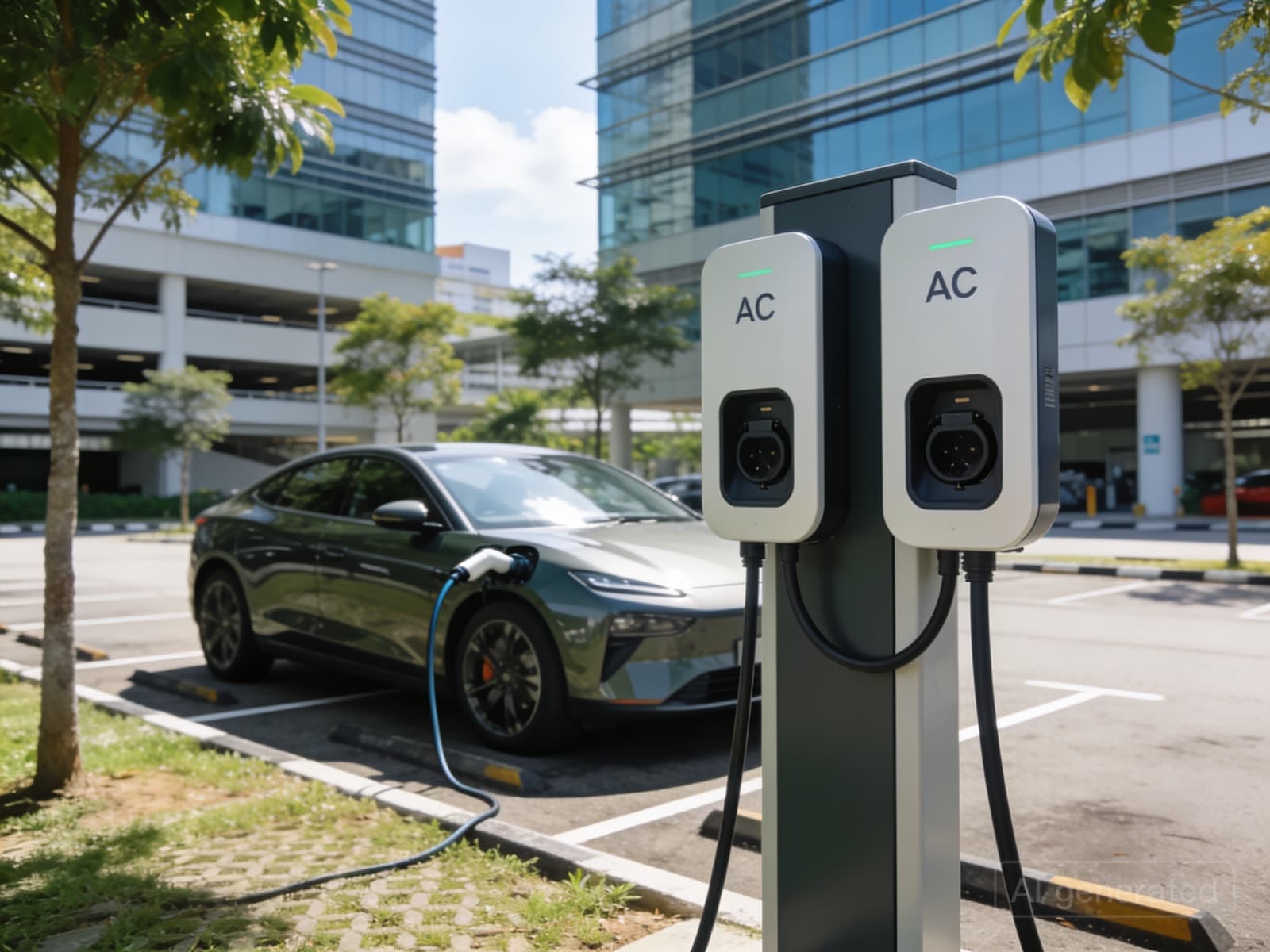
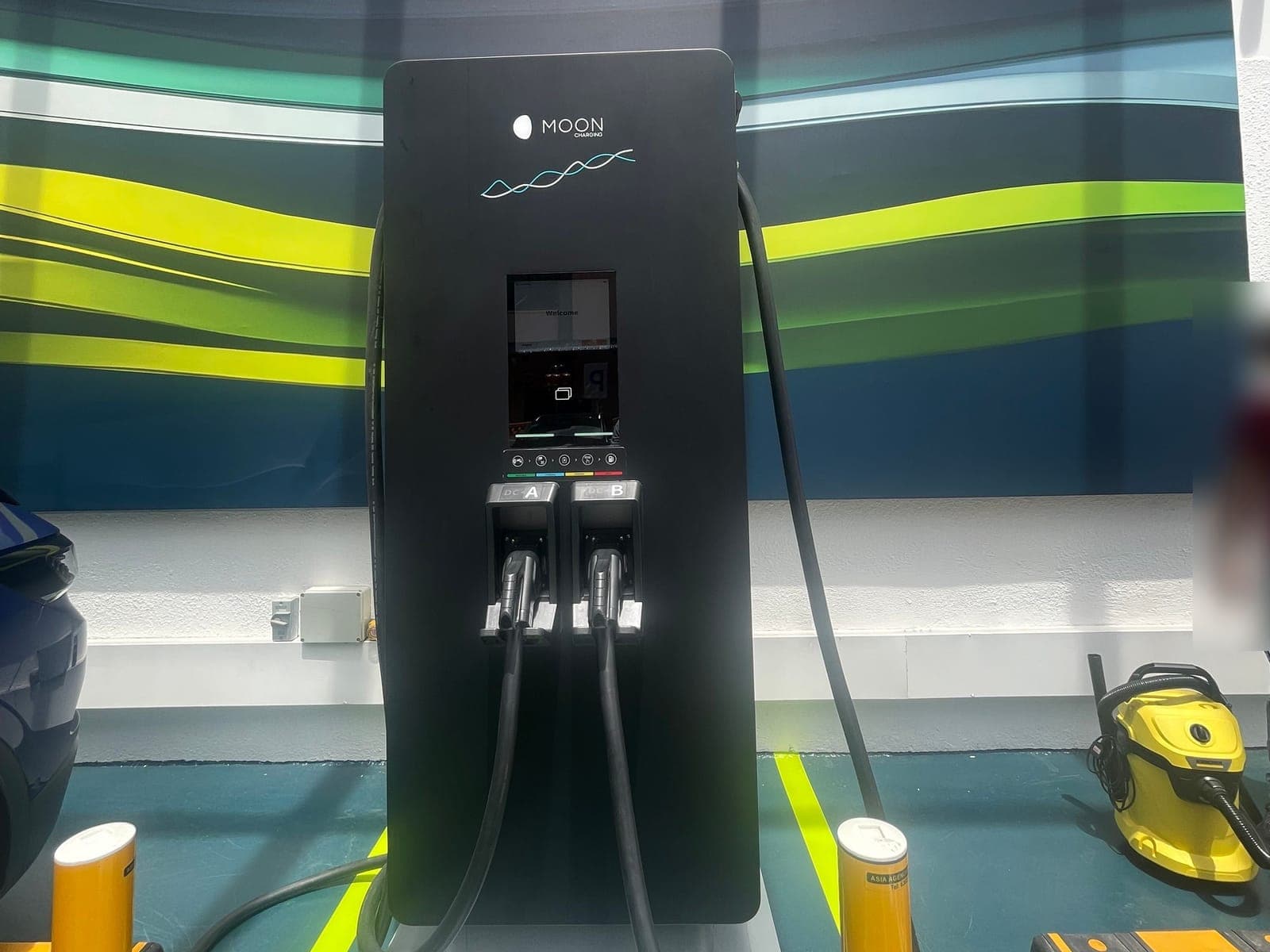
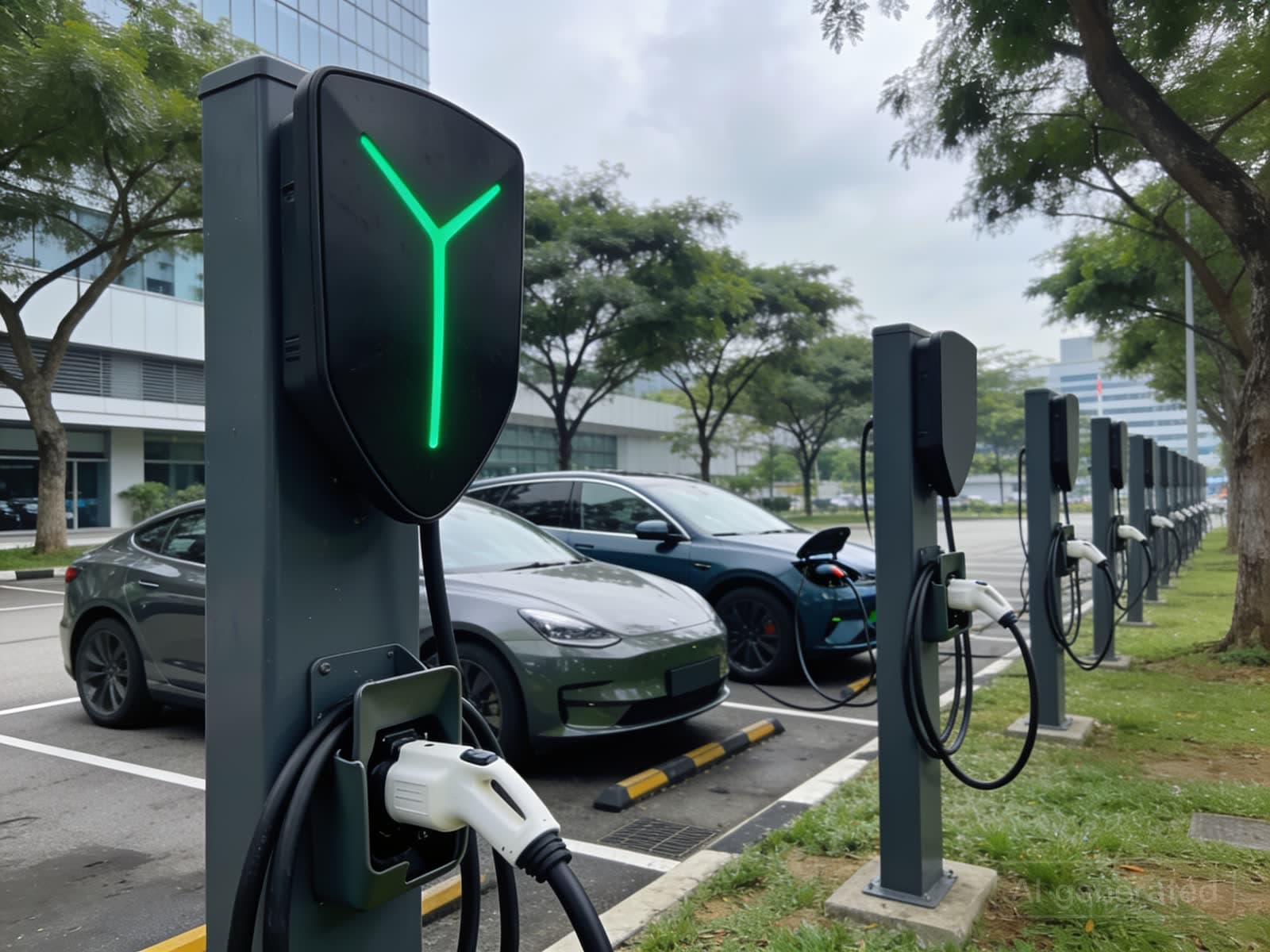
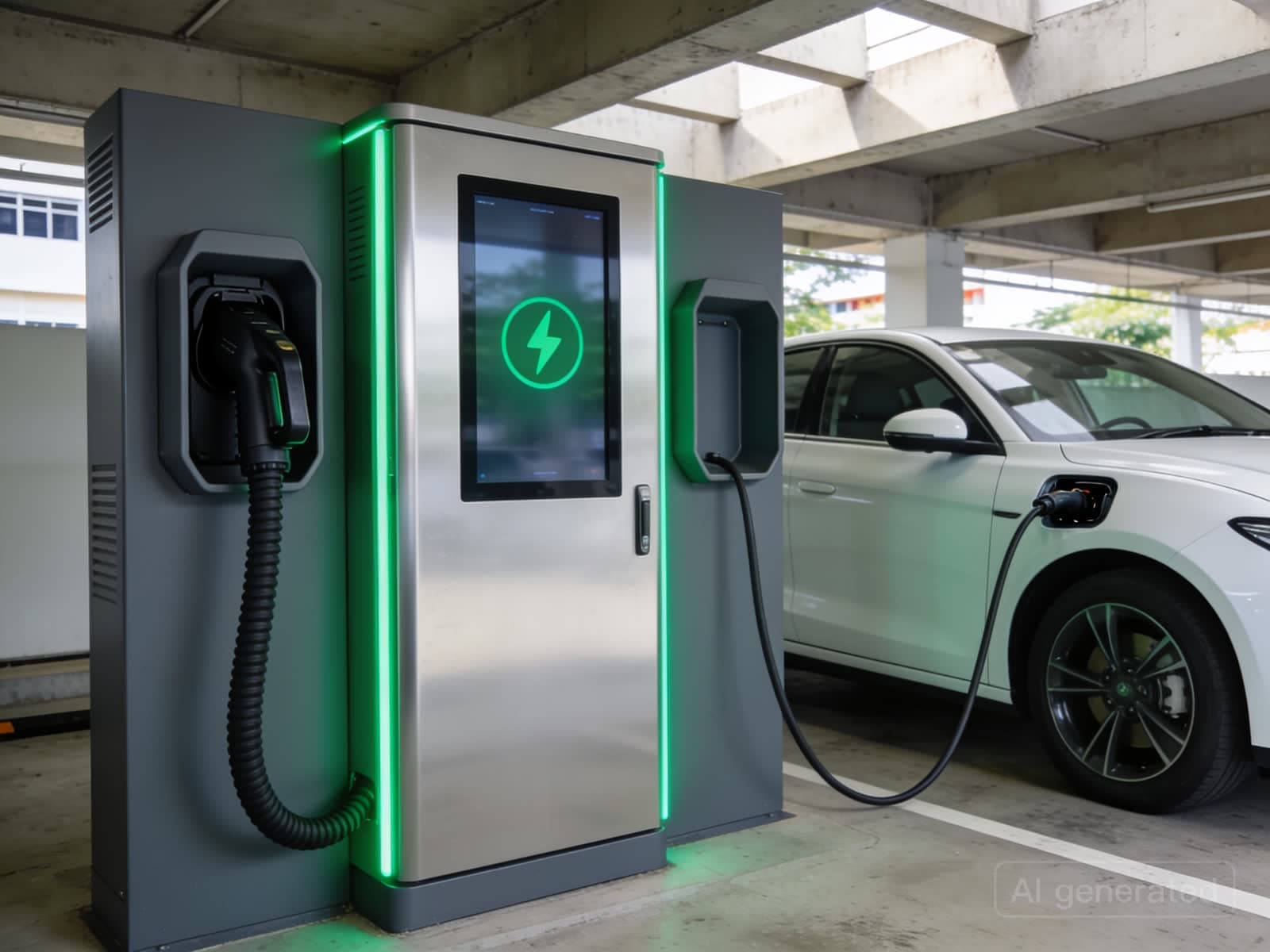
See our commercial EV charging projects for showroom, campus and fleet installations, including the Cupra showroom and ITE College East.
Related
Other services for businesses
- Condo EV charging for MCSTsShared resident chargers with in-app billing for condos and private apartments.Learn more
- EV charger maintenance and inspectionsScheduled 6- or 12-monthly inspections and repairs for commercial chargers.Learn more
- Commercial solar for your rooftopGenerate power on site to offset what your chargers use.Learn more
Also see all EV charger installation services, home EV chargers for landed homes and guides to commercial EV charging in Singapore.
FAQ
Commercial and DC fast charging: common questions
How much does a commercial or DC fast charger cost in Singapore?
It depends on the charger, the cable route and whether your supply needs upgrading, so commercial projects are quoted after a site study. A StarCharge Venus 30 (30kW DC fast charger) starts from S$16,850. The exact scope is set out in your proposal.
Should my business install AC or DC chargers?
Choose AC where cars stay for hours, such as staff and visitor parking, and DC where vehicles must turn around quickly, such as fleet depots and busy retail sites. Many sites use both: AC for long stays and one or two DC units for quick top-ups.
Do I need an EV Charging Operator (EVCO) licence to let the public charge?
Yes. LTA requires anyone providing EV charging services to the public to hold an EVCO licence, valid for three years. You do not need one to charge only your own fleet. SuperCharge.SG is itself an LTA-licensed EVCO, and we tell you early which applies to your site (OneMotoring, as of 26 Oct 2026).
Will my building need an electrical upgrade for EV chargers?
Sometimes. We measure your spare capacity and peak load first. Load management lets several chargers share the power you already have. If DC fast charging needs more supply than the building has, we plan the upgrade with your electrical team early, because it has the longest lead time.
Are there grants for commercial or heavy-vehicle chargers?
LTA's Electric Heavy Vehicle Charger Grant (EHVCG) co-funds up to 50% of installation, capped at S$30,000 per charger, for smart chargers of 50kW or more at lorry or coach lots, until 31 Dec 2028 or 500 chargers. The condo ECCG does not cover commercial or industrial sites (LTA, as of 26 Oct 2026).
What is a CPMS and do I need OCPP?
A charge point management system (CPMS) is the software that monitors, controls and bills your chargers. OCPP is the open protocol chargers use to talk to it. With OCPP chargers you can choose or change your CPMS freely; our OCPP platform works with most OCPP 1.6 chargers.
How often must commercial EV chargers be inspected?
Chargers at commercial and other non-landed sites must be inspected every 6 months by a charger equipment specialist, or every 12 months by a Licensed Electrical Worker (LTA, as of 26 Oct 2026). We can schedule this for you under a maintenance plan.
How do I bill staff, fleet drivers or visitors for charging?
Through our OCPP platform. You set the tariff, decide who can charge, and drivers start and pay for sessions themselves. Fleet managers see usage by vehicle or driver, and you get monthly reports.
Plan charging for your business or fleet
Tell us about your site, your vehicles and who will charge. We will study your supply and propose the right mix of AC and DC, with costs, timelines and grants set out clearly.