
Condos and MCSTs
Condo EV Charging for MCSTs and Managing Agents
Shared EV chargers for your residents, from the AGM paper to the first charge. We plan the car park layout, install and register the chargers, and run resident booking and billing on our OCPP platform.
For MCST councils and managing agents
Residents are asking for chargers. Here is how to say yes.
More residents drive EVs every year, and the questions reach the council quickly: where can I charge, who pays for the electricity, and is it safe? Shared chargers in common property answer all three. Residents book and pay for what they use, the electricity cost is recovered rather than absorbed by the maintenance fund, and the installation follows LTA's rules.
The law now makes the decision easier. Under the Building Maintenance and Strata Management Act, the voting threshold for resolutions to install EV chargers for residents' use was lowered to 50% (MOT). We prepare everything the council needs to table the motion, then deliver the project and run it afterwards.
AGM-ready proposal
Layout, costs and the resolution wording for your general meeting.Fair for everyone
Residents who charge pay for it; others do not subsidise it.Within your capacity
Load management shares the supply you already have.Run for you
Monitoring, inspections and resident support after go-live.
Grant · ends 31 Dec 2026
The EV Common Charger Grant (ECCG): half the cost, until the end of 2026
LTA's ECCG co-funds shared chargers in condos and private apartments. The MCST or a charging operator applies through the Business Grants Portal. We check your eligibility, prepare the application and size the project to the grant.
50% co-funding
Of the charger, LEW fees and cabling and installation (cabling capped at S$1,000). GST is not co-funded.
Up to S$4,000 per charger
For the first 2,000 chargers supported, then up to S$3,000 each for the next 1,500.
Smart chargers, 22kW or less
Type-approved, OCPP 1.6 or above, in common areas, for up to 1% of residential lots (rounded up).
Ends 31 December 2026
Or earlier, once 3,500 chargers have been co-funded. Applications are first come, first served.
Timing matters. LTA does not publish how much of the quota is left, and a charger must not be installed before LTA's letter of offer. If your MCST is considering the grant, start the conversation now so the application is in before 31 December 2026.
Sources (checked 26 October 2026)
The AGM and MCST process
From council discussion to residents charging
A condo project moves at the pace of its general meetings. We plan around your calendar.
Gauge demand
We help the council survey residents on how many drive EVs now and plan to soon.Free
Site survey and load assessment
We check the switch room's spare capacity, the cable routes and the best lots for a shared charger bay.Proposal paper
A layout, the costs, the billing model and draft resolution wording for the AGM or EGM.General meeting resolution
The motion needs a 50% vote under the BMSMA (MOT).Approvals and funding
We prepare the LTA paperwork and any grant application available at the time, before works start.Installation
Licensed Electrical Workers install cable trays, the supply and the chargers with minimal disruption to parking.Certification and LTA registration
An equipment specialist certifies each charger and we register them with LTA before use.Resident onboarding
Residents download the app, register and start charging. We handle their questions.Ongoing operation
Remote monitoring, periodic inspections and monthly reports for the MCST.
Car park layout
What a shared charger bay looks like
A typical layout puts the chargers close to the switch room, on lots that every resident can reach, with cables kept off the floor.
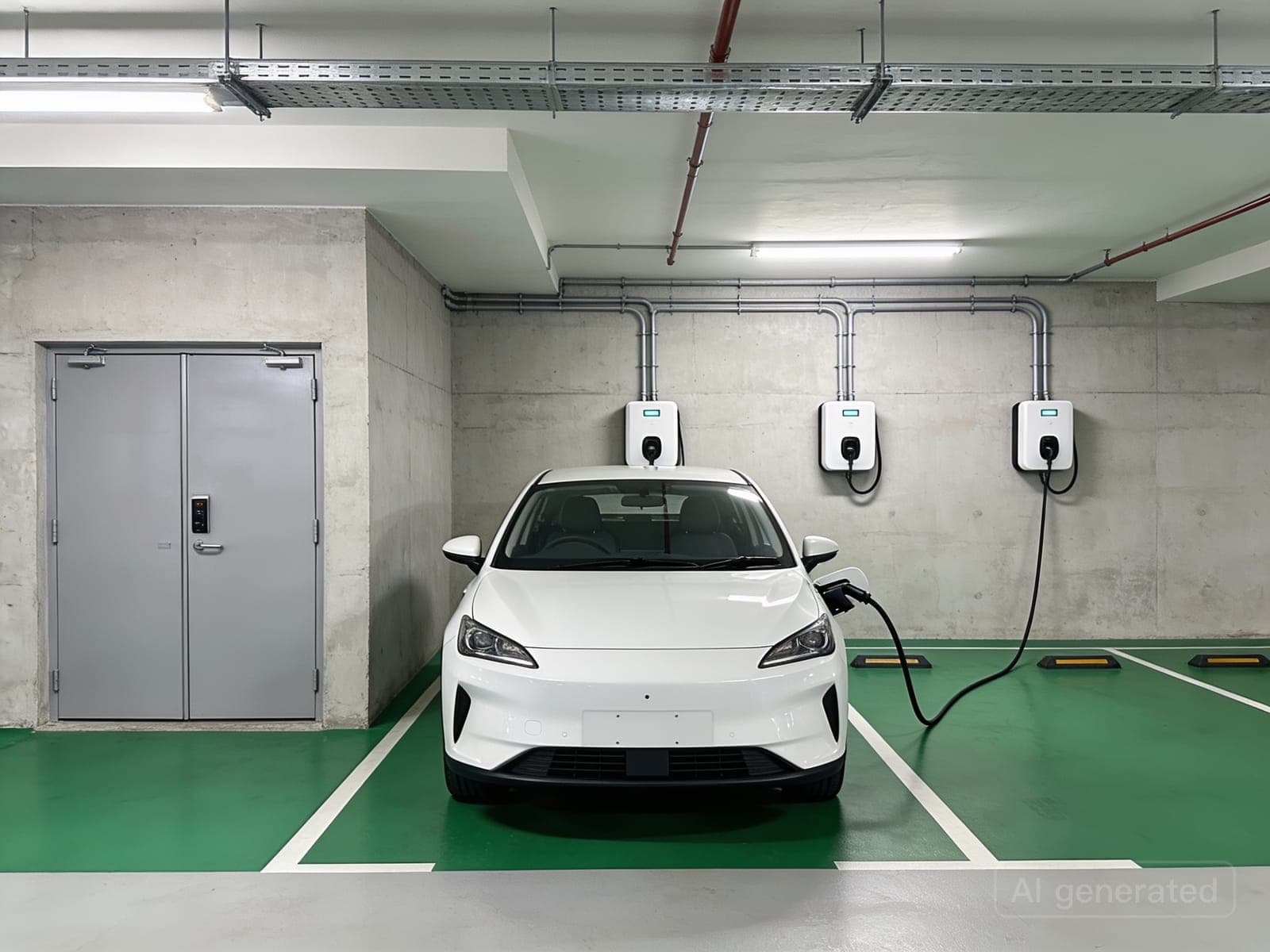
- 1. Switch room
- 2. Cable tray
- 3. Shared charger bay
- 4. Smart OCPP chargers
- 5. Platform and resident app
Switch room
We tap spare capacity at the main switchboard and fit a dedicated supply for the chargers.
Cable tray
Cables run along the car park wall or ceiling in trays, away from vehicles and walkways.
Shared charger bay
Marked EV lots in common property that any registered resident can book and use.
Smart OCPP chargers
Fixed chargers that share the available power between them and report every session.
Platform and resident app
Residents start, stop and pay in the app; the MCST sees usage, revenue and faults.
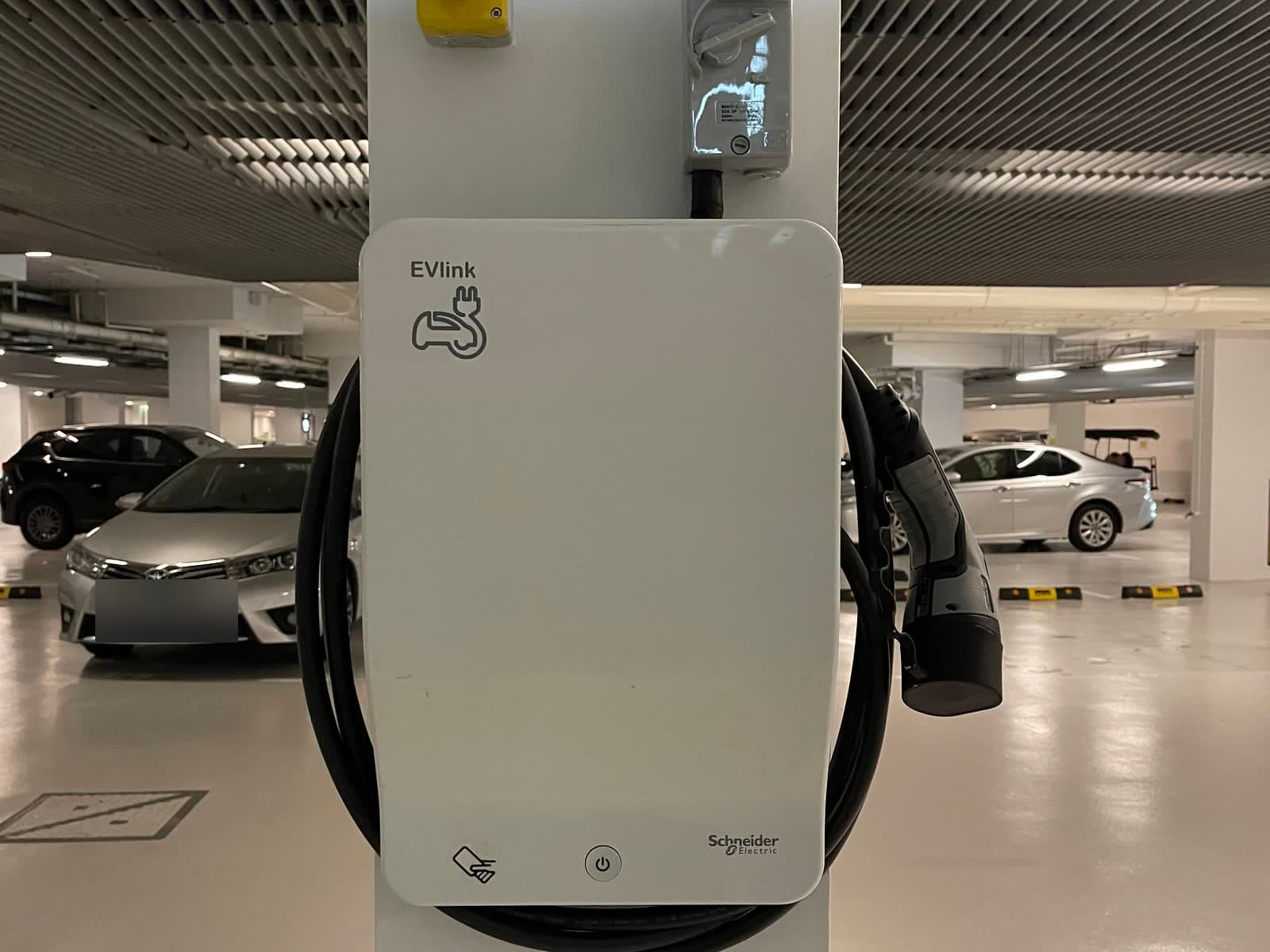
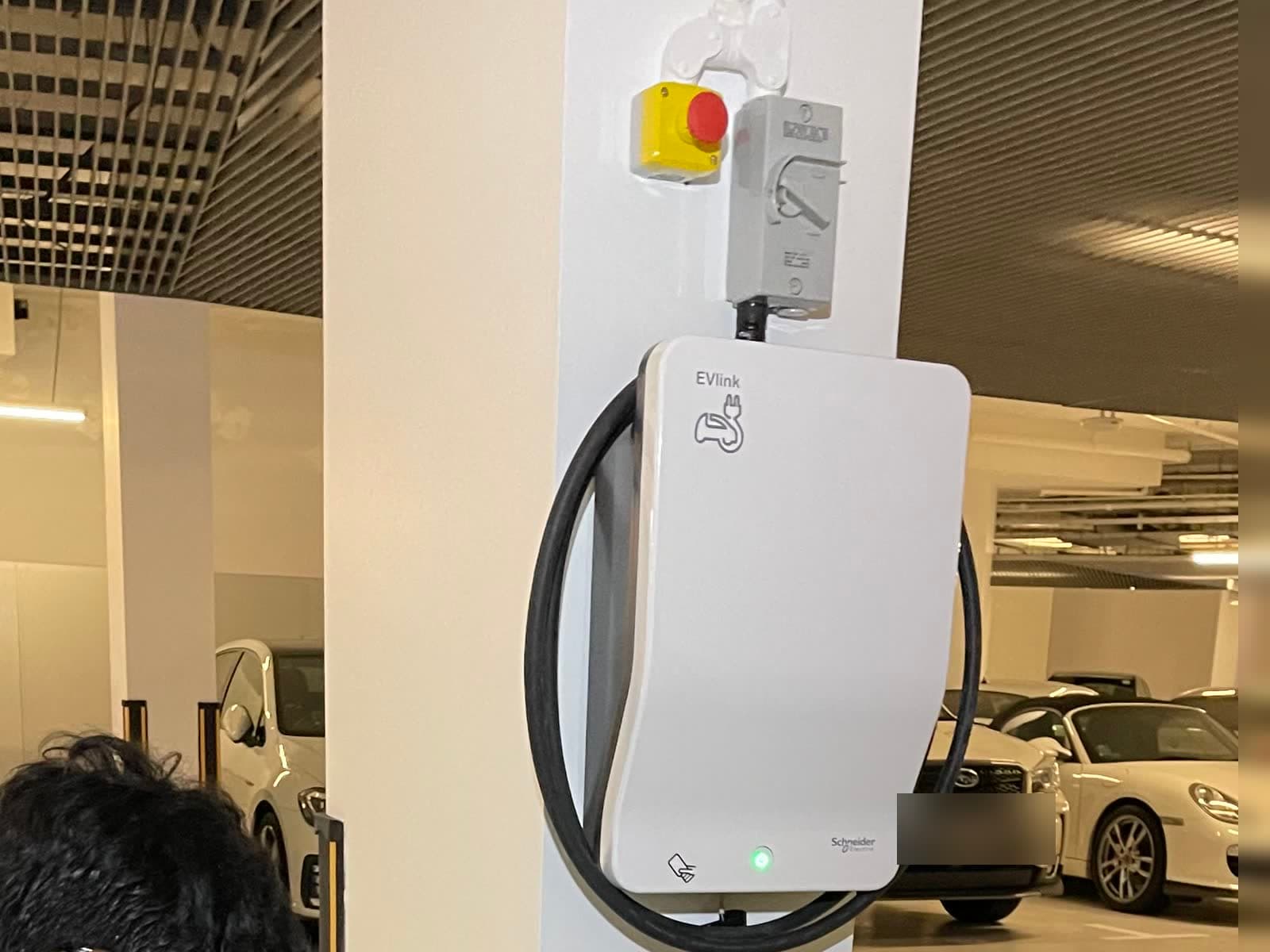
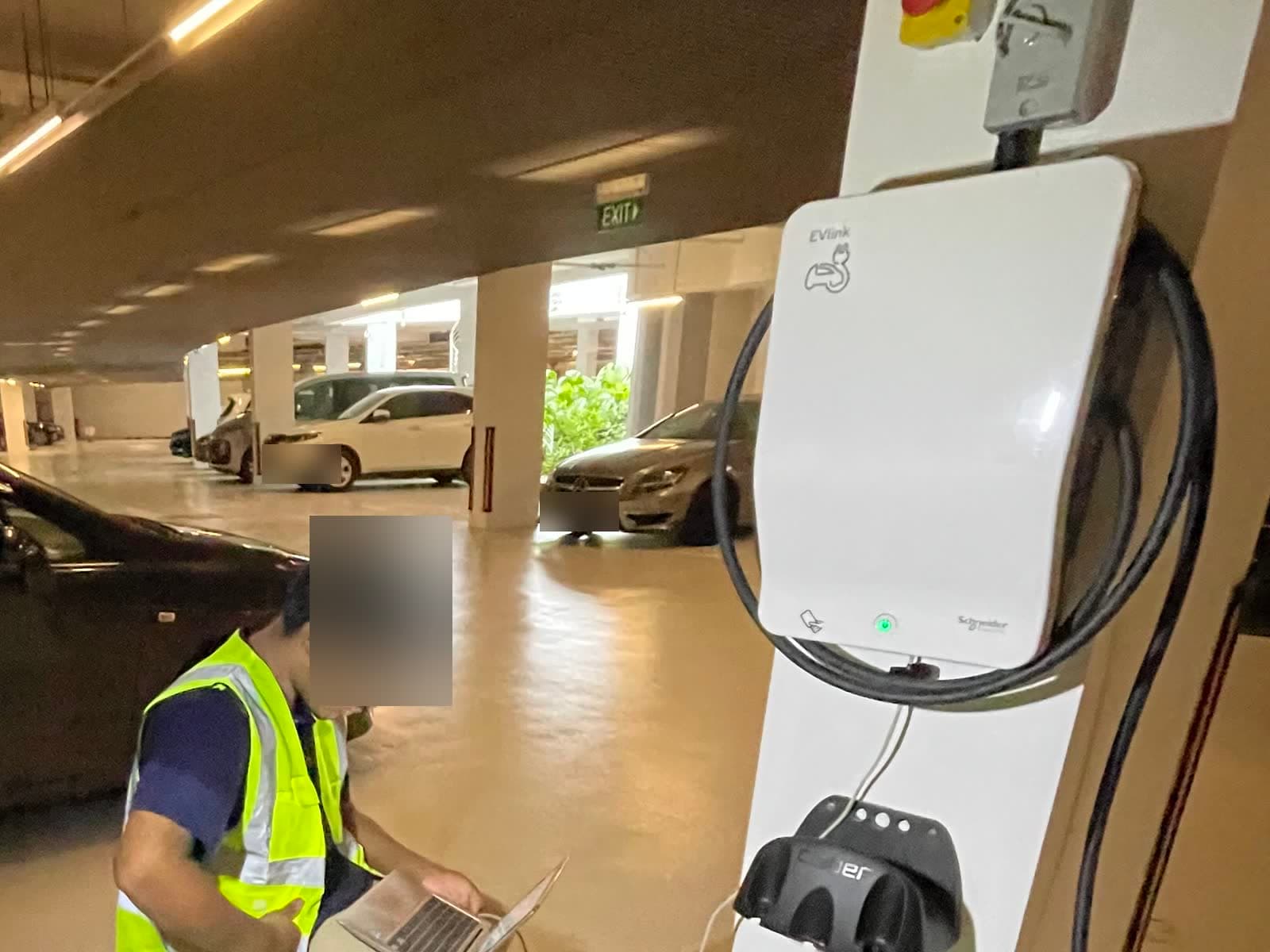
Billing and resident app
Resident booking and billing on our OCPP platform
We built our platform to run our own chargers. It works with most OCPP 1.6 chargers, so the MCST keeps the freedom to change chargers or platforms later.
Pay per kWh in the app
Residents start a session and pay at a rate agreed with the MCST.End-of-charge alerts
Residents get notified when charging ends, so bays free up for the next car.Reports for the MCST
Usage, revenue and energy by month, ready for the council and the managing agent.Load management
Chargers share the available power, so more cars charge without overloading the supply.
Ownership
Two ways to own it
The MCST chooses who owns the chargers. We install, register and look after them either way.
MCST-owned chargers
The MCST buys the chargers, so the estate owns them outright.SuperCharge-funded chargers
We fund the chargers, with no upfront cost to the MCST.
Pricing
What a condo EV charging project costs
Condo shared chargers
Every car park is different, so we quote after a free site survey and load assessment.
What affects the price
- The number of chargers, and how many lots are made EV-ready for the future
- Distance from the switch room to the charger bay, and the cable tray route
- Spare capacity at the main switchboard, and whether load management is enough
- Charger power (AC up to 22kW) and pedestal or wall mounting
- Grant co-funding available at the time of application
Compliance
LTA rules for condo chargers
Condo car parks are not restricted-access locations, so stricter rules apply than at landed homes (as of 26 October 2026).
Fixed, type-approved chargers
Non-fixed chargers are allowed only at landed homes. Condo chargers are fixed, LTA type-approved models (TR 25 / SS 722).LEW installed, specialist certified
Installed by a Licensed Electrical Worker and certified by a charger equipment specialist.Registered with LTA
Each charger is registered before use. LTA's fee for a non-restricted charger below 23kW is S$150 (no GST).Inspected every 6 or 12 months
Every 6 months by an equipment specialist, or every 12 months by an LEW. Certificates kept for two years.
Our work
Condo charging we already run
We run shared resident charging at The Madeira and The Coast @ Sentosa Cove condominiums on our own platform today: residents book and pay in the app, and we handle monitoring, inspections and resident questions for the MCST. We are an LTA-licensed EV charging operator (EVCO).
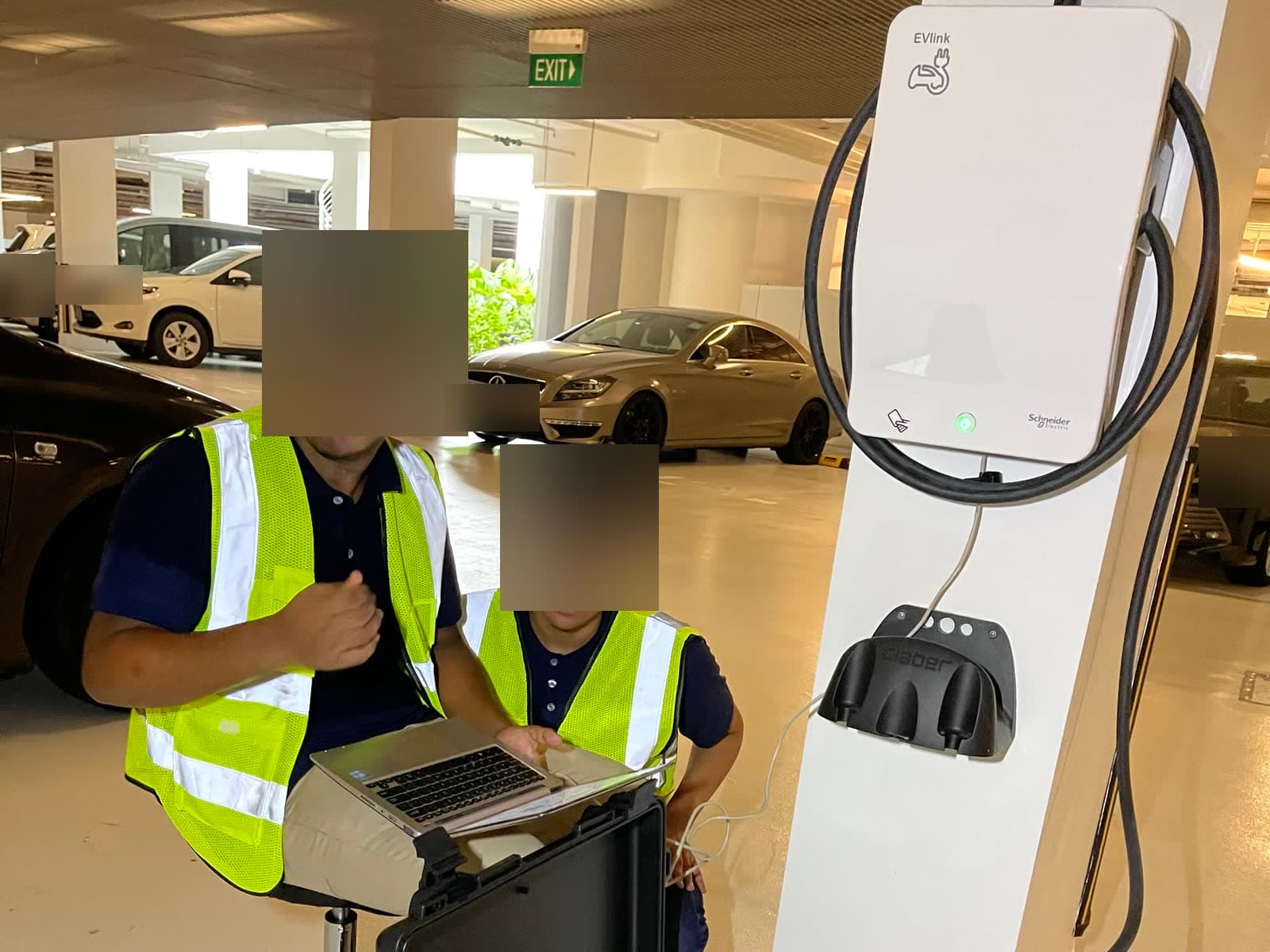
The Coast @ Sentosa Cove
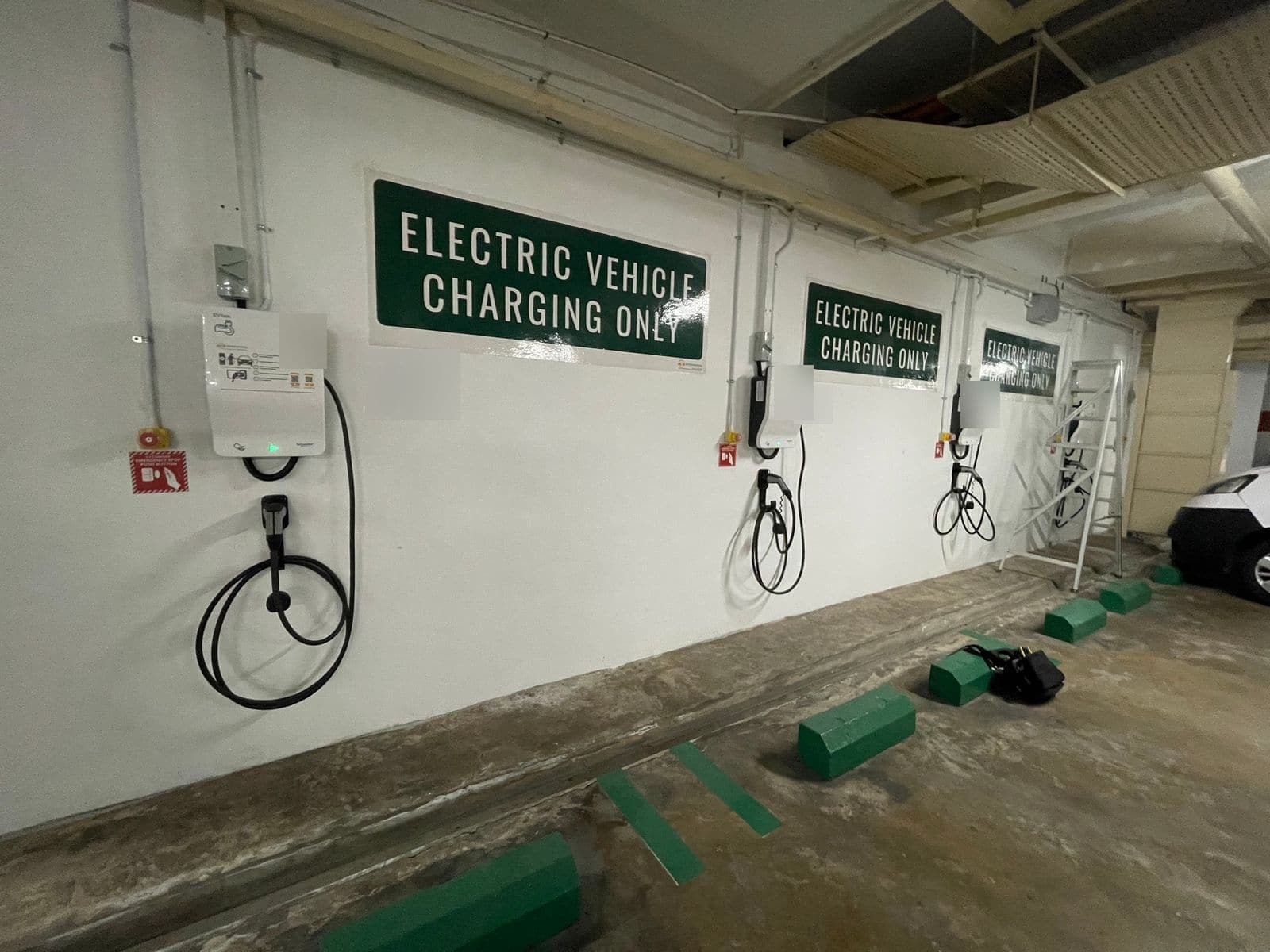
The Madeira
Related
More for managing agents and building owners
- EV charger maintenance and inspectionsSix-monthly or twelve-monthly inspections booked and documented for your MCST.Learn more
- Commercial and DC fast chargingFor mixed developments, offices, retail podiums and fleets.Learn more
- OCPP charge point management platformRun most OCPP 1.6 chargers: booking, billing, alerts and reports.Learn more
Also see all EV charger installation services, home EV chargers for landed homes and guides for MCSTs on EV charging.
FAQ
Condo EV charging: questions from MCSTs
What is the EV Common Charger Grant and how much does it cover?
The ECCG is LTA's grant for shared chargers in condos and other private apartments. It co-funds 50% of the charger, the LEW fees and the cabling and installation (cabling capped at S$1,000), up to S$4,000 per charger for the first 2,000 chargers and S$3,000 for the next 1,500. GST is not co-funded (LTA, as of 26 Oct 2026).
Is the ECCG still available, and when does it end?
The grant is available until 31 December 2026, or until 3,500 chargers have been co-funded, whichever comes first. LTA does not publish how much quota is left, so talk to us early: chargers must not be installed before LTA's letter of offer.
Which chargers qualify for the ECCG?
Type-approved smart chargers of 22kW or less that support OCPP 1.6 or above, installed in a common area shared by residents. Up to 1% of the development's residential car park lots (rounded up) can be co-funded. Landed homes, shophouses, hotels, serviced apartments and commercial or industrial sites are not eligible.
What MCST vote is needed to install EV chargers in a condo?
The voting threshold for condo resolutions to install EV chargers for residents' use was lowered to 50% under the Building Maintenance and Strata Management Act (MOT). We prepare the proposal paper, the costs and the layout for your AGM or EGM so the council can table it.
Can a resident install a private charger at their own condo lot?
Condo car parks are shared, so any charger there needs the MCST's approval, and LTA allows non-fixed chargers only at landed homes. Condo chargers must be fixed chargers installed by an LEW. Many MCSTs choose shared chargers that every resident can book and pay for, which is the setup we run.
Who pays for the electricity and how are residents billed?
Residents pay for what they use. Through our OCPP platform, each resident starts a session and pays through the app at a per-kWh rate agreed with the MCST. The MCST gets usage and revenue reports, so electricity used for charging is recovered rather than added to the maintenance fund.
How many chargers does our condo need, and will our electrical capacity cope?
We start from how many residents drive EVs today and how many lots the MCST wants to make EV-ready, then check the spare capacity at the main switchboard. Load management shares the available power between chargers, so more cars can charge without upgrading the supply on day one.
Who maintains condo chargers and how often must they be inspected?
Chargers in condos must be inspected every 6 months by an equipment specialist or every 12 months by an LEW (LTA, as of 26 Oct 2026). We schedule the inspections, keep the certificates and monitor every charger remotely, so faults are seen early.
Why should condo chargers be OCPP smart chargers?
Smart OCPP chargers can be booked, billed, monitored and load-managed from one platform. Because OCPP is an open standard, the MCST is not tied to one supplier's software and can change platform later without replacing the chargers.
How long does a condo EV charging project take?
The timeline is set mostly by the MCST meeting calendar and approvals, then by the installation works, certification by an equipment specialist and LTA registration. We give you a project plan after the site survey and work around your general meeting dates.
Plan your condo's EV charging
Tell us your development and how many residents drive EVs. We will survey the car park and prepare a proposal your council can table at the next general meeting.